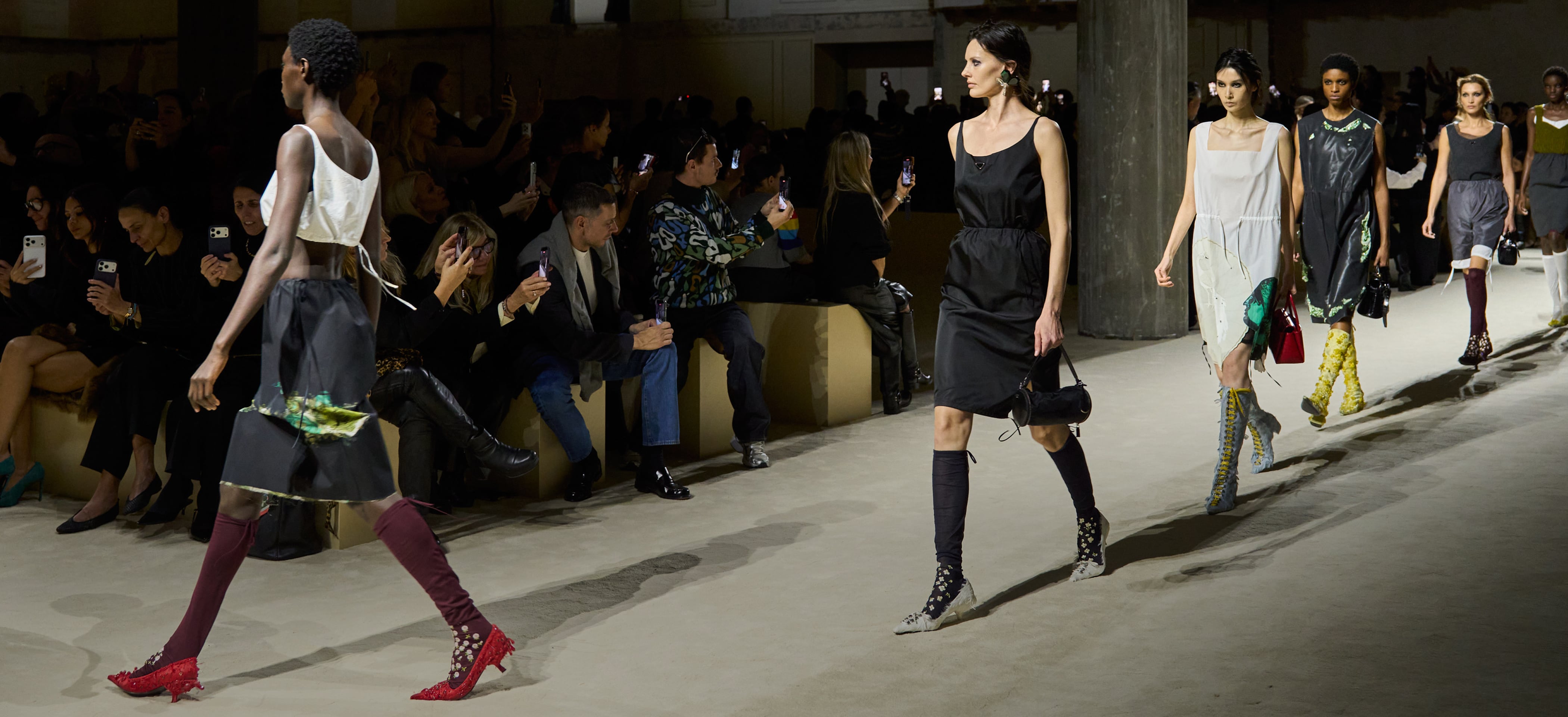
The Deposito of the Fondazione Prada, on an industrial street south of the city centre, smells of old wood and whatever temperature the room has been for the last several hours. By the time the show begins, it also smells of the three hundred people in it, which is a less poetic observation but a more accurate one.
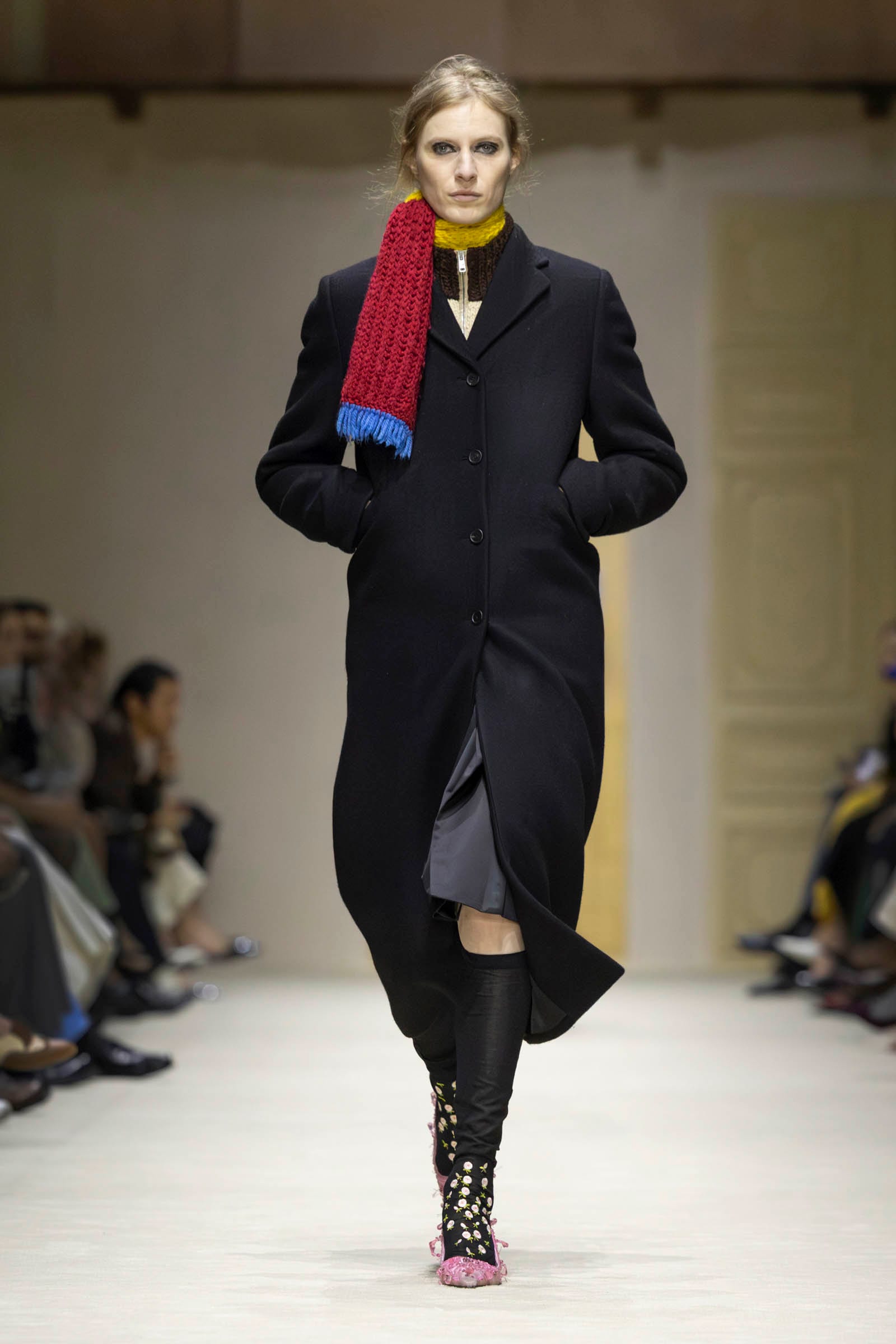
Look 1 — Prada FW2026 Womenswear, Fondazione Prada Deposito, Milan
The Fall/Winter 2026 Prada womenswear show took place on February 26th. The Deposito — the raw industrial warehouse that Miuccia Prada and Raf Simons have used as a venue for several seasons now, and which has become, through repetition, one of the most legible spaces in fashion — had been dressed for the occasion with historical artifacts spanning five centuries: 16th and 17th century tapestries, 18th century Venetian mirrors and consoles, furniture and lamps from the early 20th century. The effect was of a room that had been accumulating significance for a long time and was not particularly concerned about whether you noticed.
The collection, in Simons and Prada’s own words, explored “a fascination with the process of layering, of transforming through the day, through your clothes.” Each of the fifteen models walked four times, removing layers with each circuit of the room. What started as tailored outerwear became, over the course of an hour, something more personal and more difficult to categorise.
Each model walked four times, removing a layer with each pass. What started as outerwear became, by the fourth circuit, something that felt private.
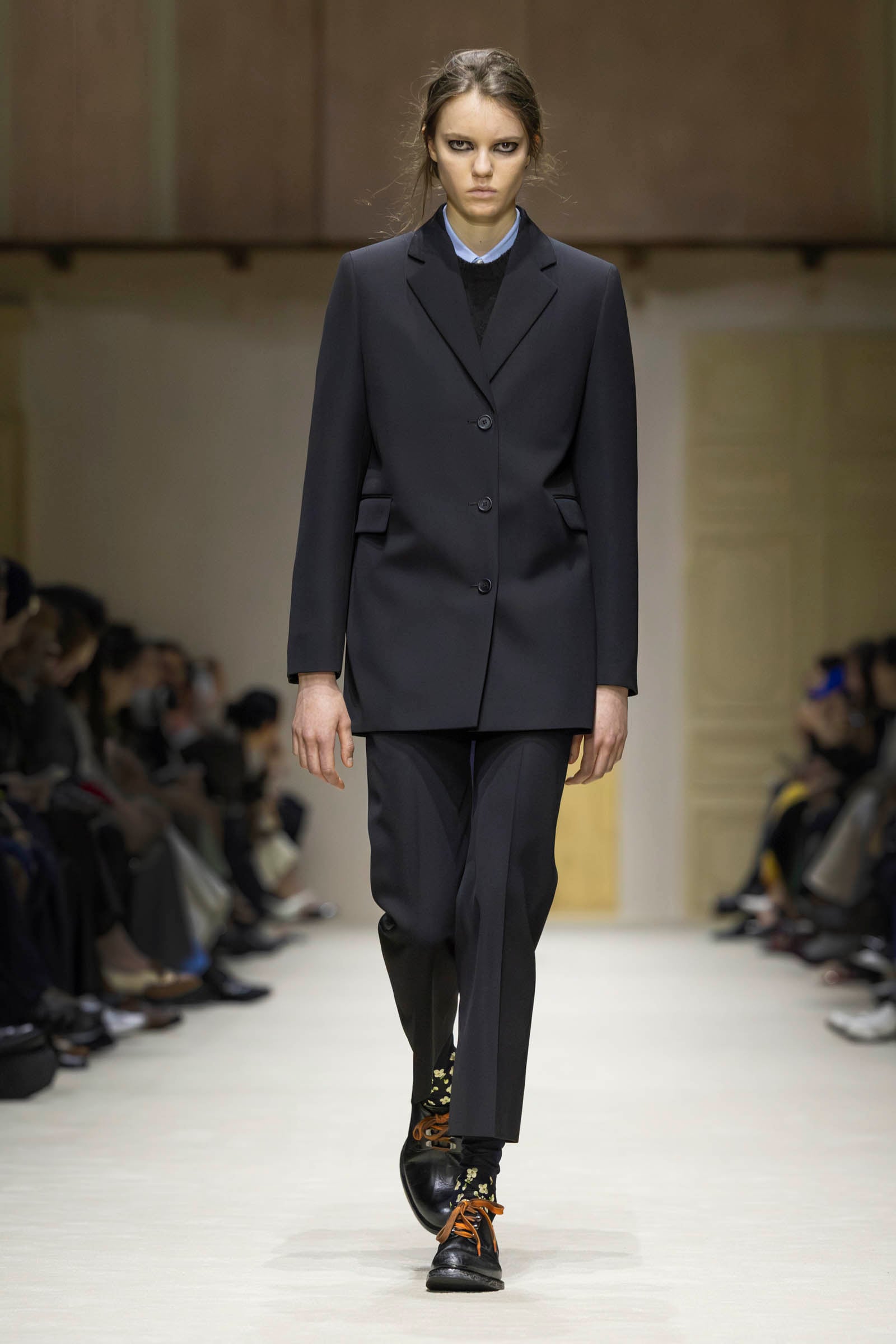
Look 3 — layering as technique and thesis
The collection
The clothes themselves were operating on two registers simultaneously, which is the hallmark of the Prada-Simons collaboration at its best and most challenging. On one register: the surface pleasures of tailored wool coats, embroidered satin dresses, the contrast between sportswear elements and evening-weight fabrics. On the other register: a set of ideas about what clothing is for, about the relationship between the body and what it wears, about what a woman reveals and what she retains over the course of a day.
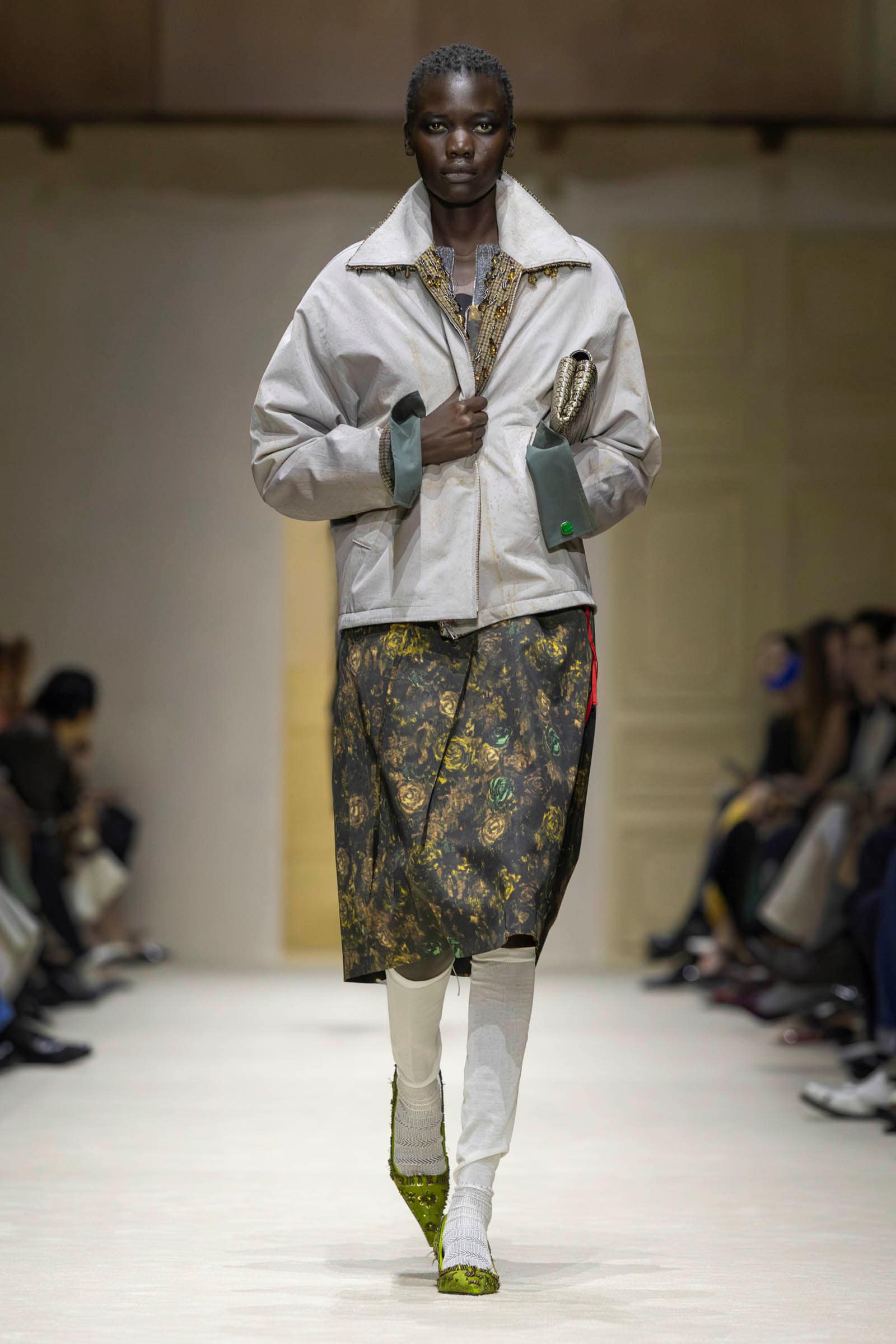
Look 5 — the kind of coat that changes how you stand
The corroded wool — fabric intentionally deteriorated to reveal blurred florals underneath, as though the pattern had been there all along but required time to surface — was the collection’s most precise statement. It is not a pretty effect. It is, however, a very precise one: the idea of buried things becoming visible, of archival material embedded within contemporary form. The show notes spoke of “buried memories unearthed over time.” The clothes said the same thing, more efficiently.
From the second row
The second row at a Prada show is not where decisions are made. The decisions — about what to order, what to feature, what to think about the collection’s commercial implications — are made in the first row, and then reconsidered, and then made again in the car on the way to the next show. The second row is where you are close enough to see the construction and far enough back to see the clothes.
From the second row, the layering thesis was visible in a way that the coverage photographs cannot quite replicate. The models’ fourth pass — the final circuit, when the outer layers had been removed and what remained was the innermost garment, the thing the collection had been building toward from the beginning — felt, if this is a word that can be applied to a fashion show, intimate. Not exposed. Intimate. There is a difference, and Prada has always known the difference.
Prada Fall/Winter 2026 Womenswear, Fondazione Prada Deposito, Milan — Photography © Acielle / Style du Monde