Paris Fashion Week Autumn/Winter 2026 ran for ten days, staged approximately ninety shows, and consumed the city with the specific kind of exhaustion that only fashion week produces — the kind where you are simultaneously overstimulated and under-nourished, and where every hotel lobby becomes a de facto office. These are the five collections we are still thinking about.
The season arrived with a question that had been building since September: what happens when the new guard — Jonathan Anderson at Dior, Matthieu Blazy at Chanel, McCollough and Hernandez at Loewe — stops introducing themselves and starts making definitive statements? The answer, it turns out, is that Paris becomes interesting again in a way it has not been for several seasons.
What follows is not a comprehensive review. It is an edit. Five shows, chosen not for commercial significance or celebrity wattage but for the quality of the thinking behind them and the precision with which that thinking was expressed on the runway. We have ignored several very famous houses. We have included one collection that most publications will overlook. This is, we think, how criticism should work.
Dior — A walk in the Tuileries
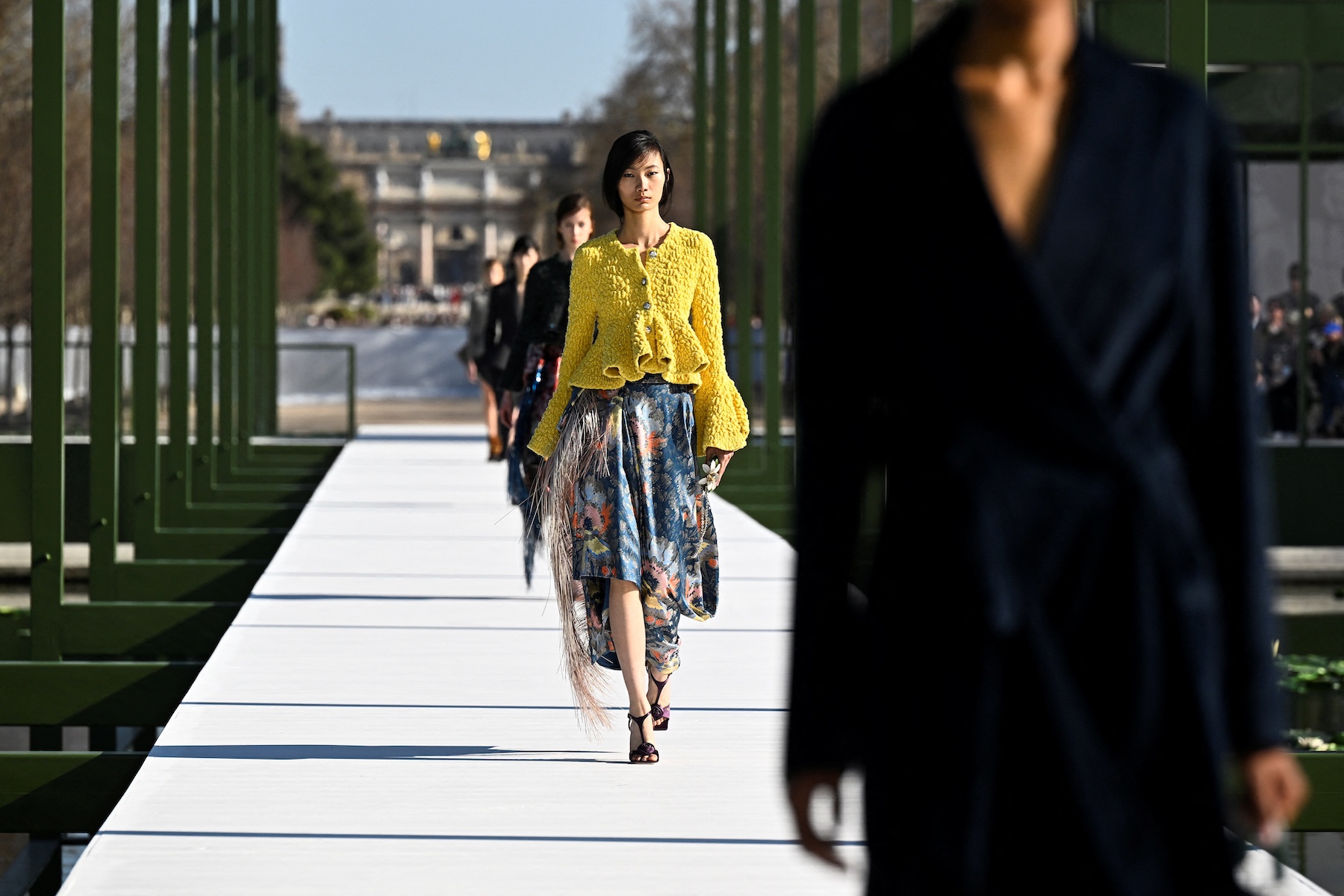
Dior Autumn/Winter 2026 — Jonathan Anderson's sophomore womenswear collection staged in the Jardin des Tuileries — Photography via Wallpaper*
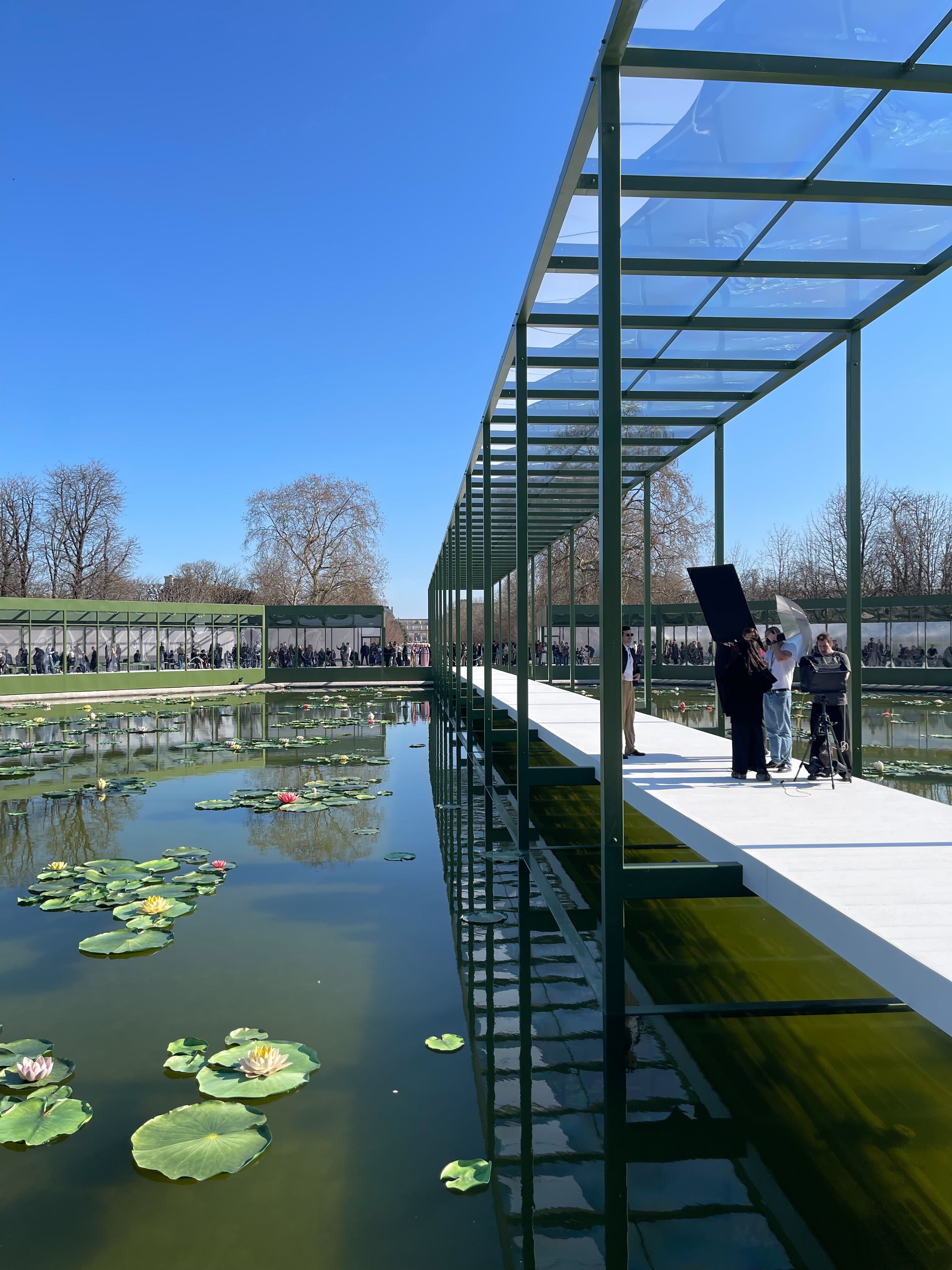
Jonathan Anderson built a greenhouse around the Bassin Octogonal in the Jardin des Tuileries, filled it with Monet-esque lily pads, and sent out what may be the most complete collection any designer has shown since taking over a legacy house in recent memory. The premise was disarmingly simple: a walk in the park. The execution was anything but.
The Bar jacket — Dior’s most sacred garment — appeared loosened, reimagined as pastel knits with fluted peplums, as frock coats with rippling fronts, as abbreviated versions layered over embroidered mini-crinis. Chrysanthemums appeared on necklines and handbags. Water lilies adorned jewellery and shoes. The effect was of a house that had finally stopped auditioning its new creative director and started listening to what he actually wanted to say.
What Anderson wanted to say, it seems, is that Dior can be both reverential and alive — that the archive is not a museum but a garden, and that gardens are things you walk through, not things you preserve under glass. It was, by a considerable margin, the show of the season.
Anderson treated the Dior archive not as a museum but as a garden — something to walk through, not something to preserve under glass.
The Splendid Edit — Issue No. 01, ParisChanel — La Conversation, Part Two
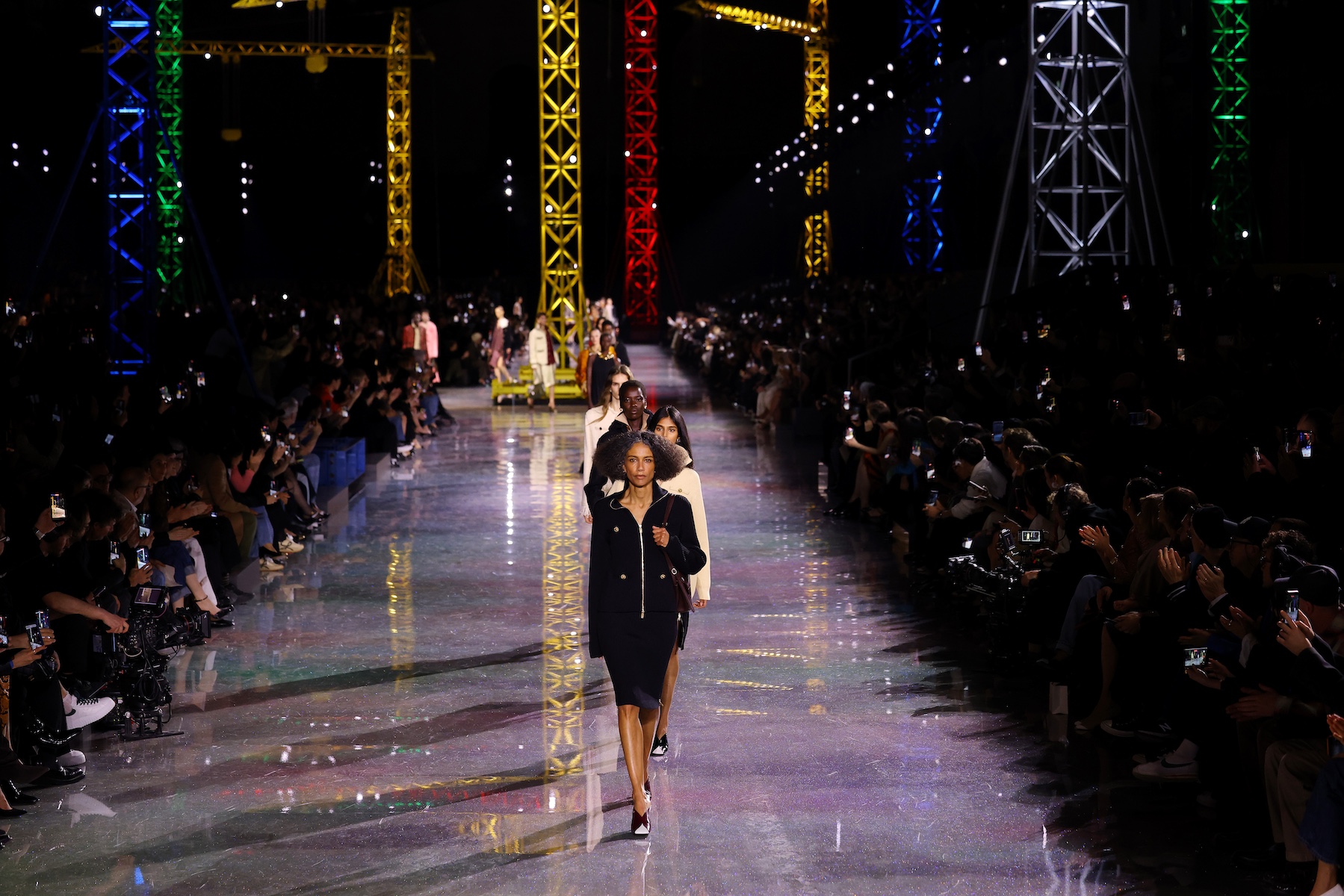
Chanel Autumn/Winter 2026 — Matthieu Blazy’s second collection for the house — Photography via Wallpaper*
Matthieu Blazy’s second outing at Chanel was titled La Conversation — Part Two, and the conversation in question appeared to be between the house’s history of structured tailoring and Blazy’s instinct to make everything move. Drop-waist silhouettes lengthened the body across jersey dresses and pleated skirts. The house suit evolved: tweed and bouclé softened into relaxed jackets and swaying skirts that bore only a family resemblance to their predecessors.
As evening approached — both in the collection’s sequence and in the literal dimming of the show lights — fabrics grew iridescent and silhouettes began to flutter. Chainmail suits caught the light. Beaded knits moved like water. The collectible novelty of the season was a pomegranate-shaped minaudiere that will, inevitably, become the bag that every fashion editor photographs but nobody can actually buy until September.
Blazy’s gift is making transformation look effortless. The collection moved from caterpillar to butterfly — Gabrielle Chanel’s own metaphor for fashion — without ever announcing that it was doing so. By the final look, the house felt like it had arrived somewhere new while appearing never to have left.
Loewe — The jolt the week needed
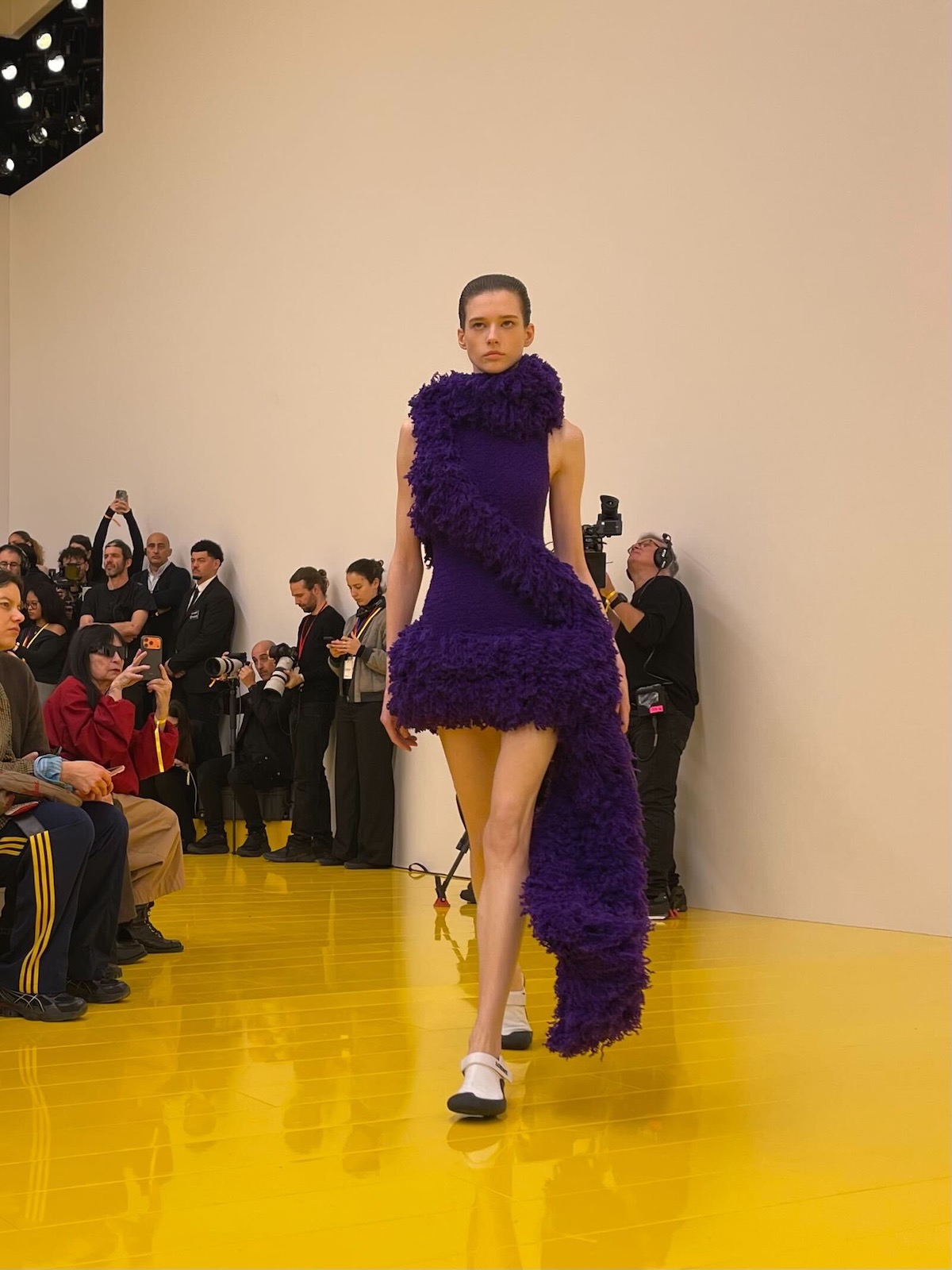
Loewe Autumn/Winter 2026 — McCollough and Hernandez’s sophomore collection — Photography via Wallpaper*
By Friday morning of fashion week, the industry is operating on caffeine, cortisol, and whatever residual enthusiasm survived Thursday evening’s schedule. Jack McCollough and Lazaro Hernandez, formerly of Proenza Schouler, seemed to understand this. Their sophomore Loewe collection was deliberately, almost aggressively joyful — a riot of curvy dégradé shearling parkas, three-dimensional printed slips, and shaggy-hemmed dresses with trailing trains.
The sporting elements — face-shielding sunglasses, boldly coloured anoraks, chunky riffs on half-zip ski sweaters — gave the collection a physicality that felt earned rather than affected. Most remarkable were the inflatable elements: garments that could be transformed in size and proportion by the wearer, which sounds like a gimmick until you see it executed with this level of craft.
Where their debut had been a statement of colour and intent, this collection was a statement of range. They can do whimsy, they can do technique, and they can do both simultaneously. Loewe, under their direction, is becoming the house you go to when you want fashion to make you feel something other than reverence.
Louis Vuitton — Super Nature
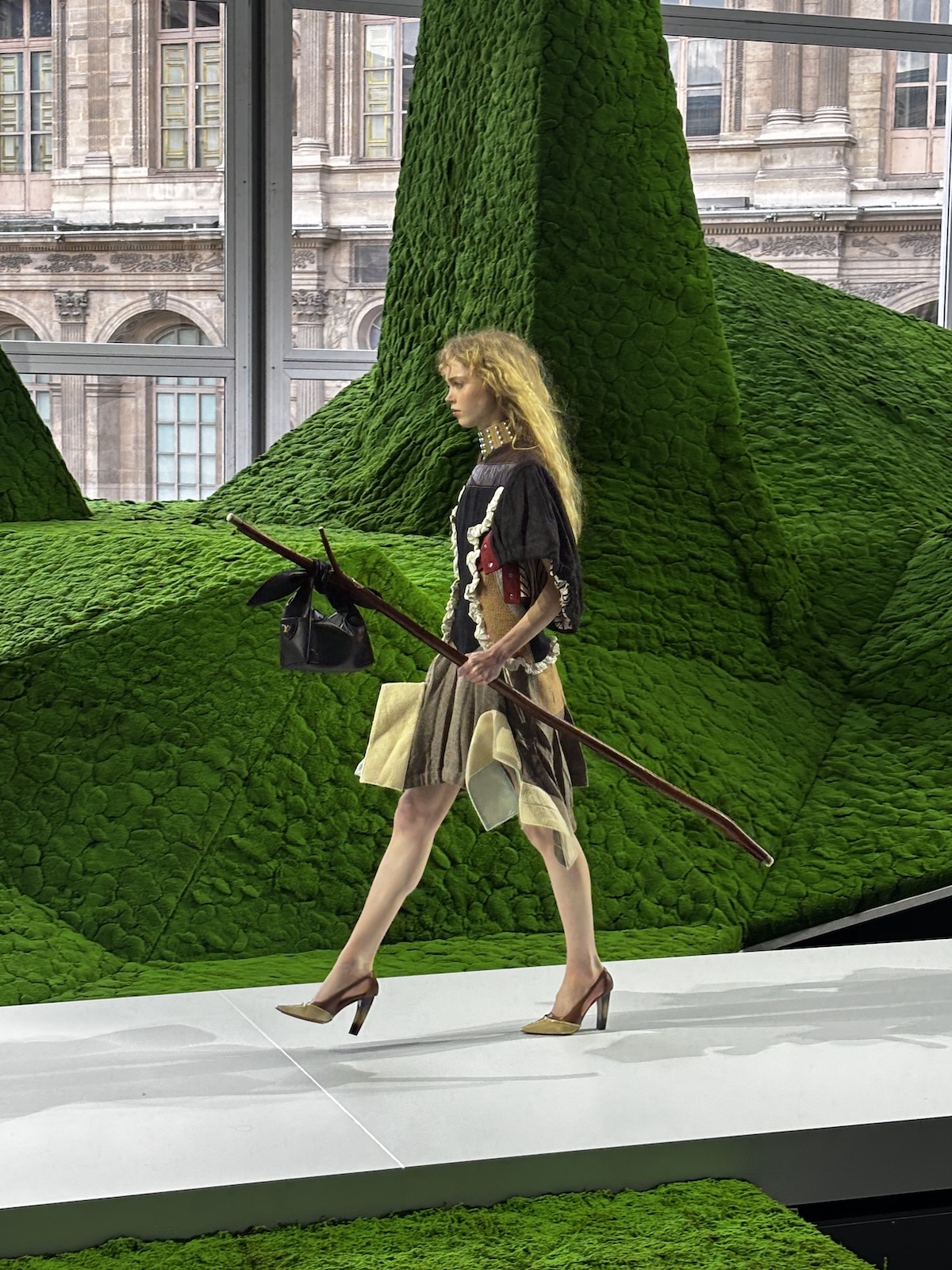
Louis Vuitton Autumn/Winter 2026 — Nicolas Ghesquière’s Super Nature collection at the Cour Carrée — Photography via Wallpaper*
Nicolas Ghesquière has been at Louis Vuitton long enough that his shows have become their own vocabulary. For Autumn/Winter 2026, he turned the Cour Carrée of the Louvre into a moss-covered landscape — artificial hills and surreal pastoral terrain, designed by Jeremy Hindle — and sent out a collection he called Super Nature.
The clothes suggested endurance, protection, movement through difficult terrain. Monumental cloaks. Textured tweeds. Sculptural leather details that evoked garments formed through exposure to wind and rain. Antler-shaped heels and oversized backpacks pushed the collection into territory that was deliberately, knowingly surreal. Folkloric clothing became the starting point — fuzzy capes, cowbells, shearling caps — for what Ghesquière described as a meeting of cutting-edge technology and traditional artisanal skill.
There were tent-shaped red dresses that created extraordinary silhouettes and coats with exaggerated fur shoulders that gave the models the proportions of characters from a story that has not yet been written. Ghesquière is at his best when he is building worlds rather than wardrobes, and this was world-building of the highest order.
Hermès — The liminal realm
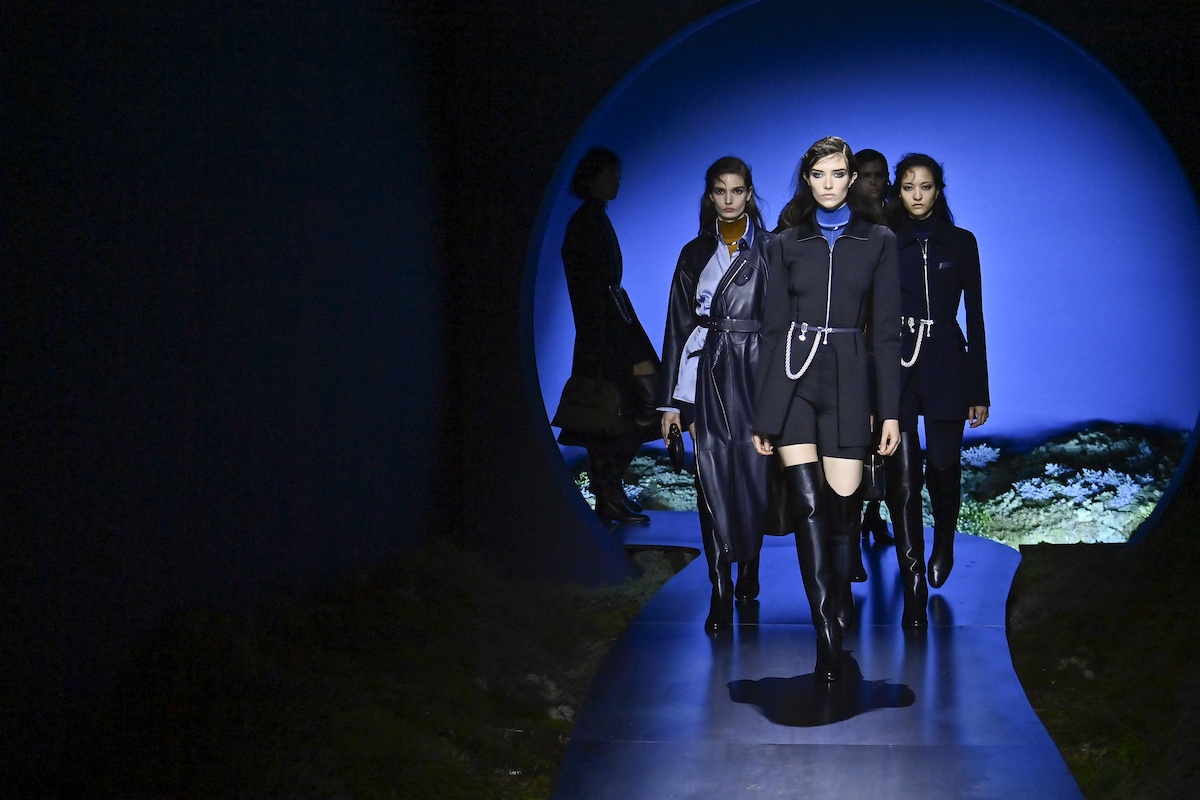
Hermès Autumn/Winter 2026 — Nadège Vanhée’s collection exploring the liminal realm — Photography via Wallpaper*
Nadège Vanhée said her collection was about conjuring a space between day and evening, between earth and something beyond it. At most houses, this kind of language would be meaningless. At Hermès, where every fabric is selected with the attention most people reserve for choosing a house, it is a precise instruction.
The equestrian codes that remain at the heart of the maison were sliced open and reconfigured: jodhpurs became cycling shorts, dressage blazers were paired with knee-high leather boots, and the whole thing moved with the easy authority of a woman who rides horses in the morning and chairs board meetings in the afternoon. Ostrich and leather jumpsuits with contrasting knit sleeves were the show pieces — garments that existed in exactly the liminal space Vanhée had described.
What makes Hermès remarkable under Vanhée is the refusal to shout. In a season of spectacular sets and dramatic transformations, her collection arrived quietly, said what it needed to say about the body and what surrounds it, and left. It was, in its restraint, one of the most confident shows of the week.
In a season of spectacular sets and dramatic transformations, Hermès arrived quietly, said what it needed to say, and left.
The Splendid Edit — Issue No. 01, ParisThe season, in summary
Paris Autumn/Winter 2026 was the season the new appointments stopped being new. Anderson, Blazy, McCollough and Hernandez — all of them in their sophomore outings — showed with a confidence that their debut collections, however accomplished, could not quite claim. The result was a week that felt less like a series of auditions and more like a genuine conversation about where fashion is going.
Where it appears to be going, based on this evidence, is toward craft, toward transformation, toward clothes that do something other than simply exist on a body. The spectacle was impressive — a greenhouse in the Tuileries, a mountain range in the Louvre — but the clothes were more impressive still. That is not always the case at Paris Fashion Week, and it is worth noting when it is.
Paris Fashion Week A/W 2026 — Runway photography courtesy of Wallpaper*